History & culture
A Greek-speaking coast that has been everyone's frontier.
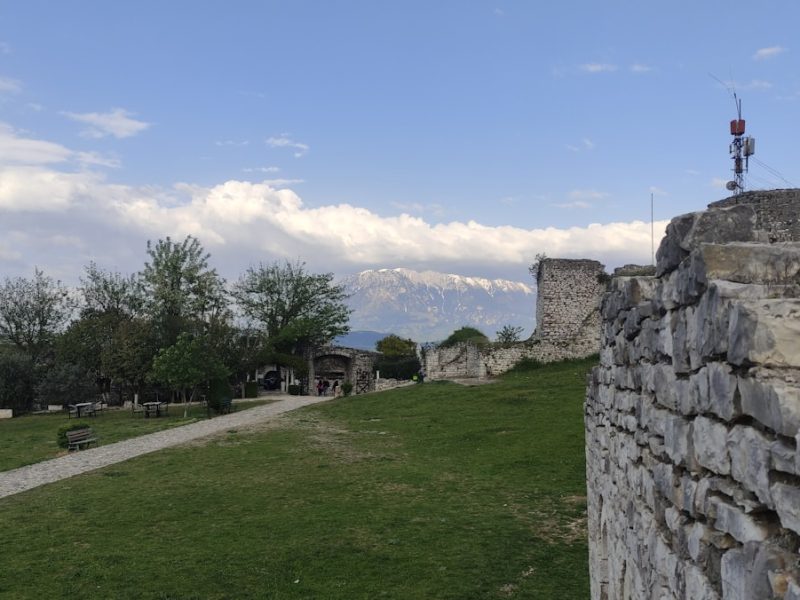
Himarë and the seven villages around it are the heart of the Albanian Greek-speaking minority — a community that has been here for at least 2,500 years, was repeatedly autonomous under Ottoman rule, and has never been entirely one thing. The hillside castles you see from the road are not decorative; they are the visible record of how often this stretch of coast had to defend itself.
A short timeline
-
6th c BCE
Greek colonists from Corinth and Corcyra settle the Ceraunian coast. Chimaera (modern Himarë) is one of the earliest.
-
1st c BCE
Romans absorb the region into the province of Epirus.
-
15th c
Himarë resists Ottoman conquest longer than most of Albania. The Venetian Republic backs the local fighters intermittently.
-
1577
A semi-autonomous arrangement is granted by the Sultan: Himarë and the surrounding villages do not pay land tax and keep their priests.
-
1797
Ali Pasha of Yanina campaigns to bring the coast under direct rule. He builds the surviving castles at Porto Palermo and Borsh.
-
1944–1990
Communism. The Greek-speaking community is partly hidden — Greek-language schools are closed, churches converted, but the language survives in homes.
-
1991
Borders open. A large share of the Greek-Albanian community emigrates to Greece; many return seasonally.
Ancient Chimaera
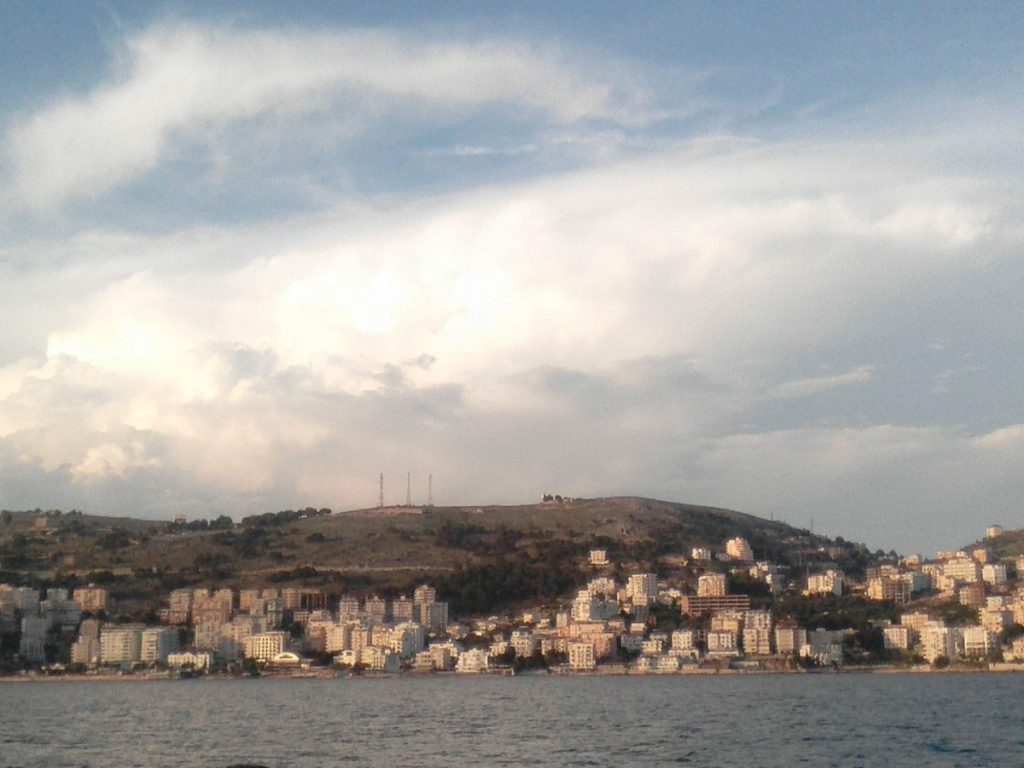
Himarë sits roughly where the ancient settlement of Chimaera stood — a Greek colony on a defensible bluff, named after the mythological fire-breathing beast (and giving its name to the surrounding Ceraunian, "thunder-struck," mountains). The Greeks brought olive cultivation; the Romans built the road that the SH8 still roughly follows. The old town climbing the hill above the modern resort area still has Greek street signs in places, alongside the Albanian.
The seven villages
Himarë is the largest of seven Greek-speaking villages strung along this coast: Himarë, Dhërmi, Palasë, Ilias, Vuno, Qeparo, and Kudhës. The villages have been linguistically and culturally Greek for as long as historical record goes, even as Greek and Albanian identities have remained complicated and intertwined for the families who live in them. Most older residents are fluent in both languages; most younger ones now also speak Italian and English. The community runs Greek schools, Orthodox churches, and a quietly distinctive cuisine — heavier on olive oil and lemon, lighter on the Ottoman influences visible in central Albania.
Ali Pasha's coast
Ali Pasha of Yanina ruled most of southern Albania and northwestern Greece between 1788 and 1822 as an Ottoman vassal who behaved like an independent prince. He fought a series of campaigns to bring Himarë and the seven villages under direct rule, and built the chain of small coastal castles you still see — Porto Palermo (his most ambitious, a triangular fortress on a peninsula), Borsh (the much-older Sopot fortress, which he restored), and watchtowers at intervals along the coast. The British envoy William Martin Leake described Ali Pasha as charming and terrifying in roughly equal measure; both descriptions fit the castles he left behind.
The 1991 wave and its return
When borders opened in 1991, a significant share of the Greek-speaking community emigrated to Greece — formally as repatriating Greeks under Greek law, in practice as economic migrants. Whole villages emptied. Twenty-five years later many have returned seasonally; some have come back permanently and reopened the family kafenia and oil presses. The current Himarë is partly a tourist town and partly a community gradually reclaiming itself, with all the contradictions that involves.
Why it matters today
Himarë is the easiest place on the Riviera to walk into a 200-year-old kafeneio, drink an espresso for one euro, and have a conversation in three languages. The castle on the hill above town is free to wander; the views are absurd. The seven-villages walking trail (a couple of hours between Vuno and Qeparo) gives a sense of why this coast was worth defending. Bring water and shoes.
Most of the Albanian coast is being built fast. Himarë is being rebuilt slowly — which makes a different kind of place.