Rent a car
Krujë

Krujë

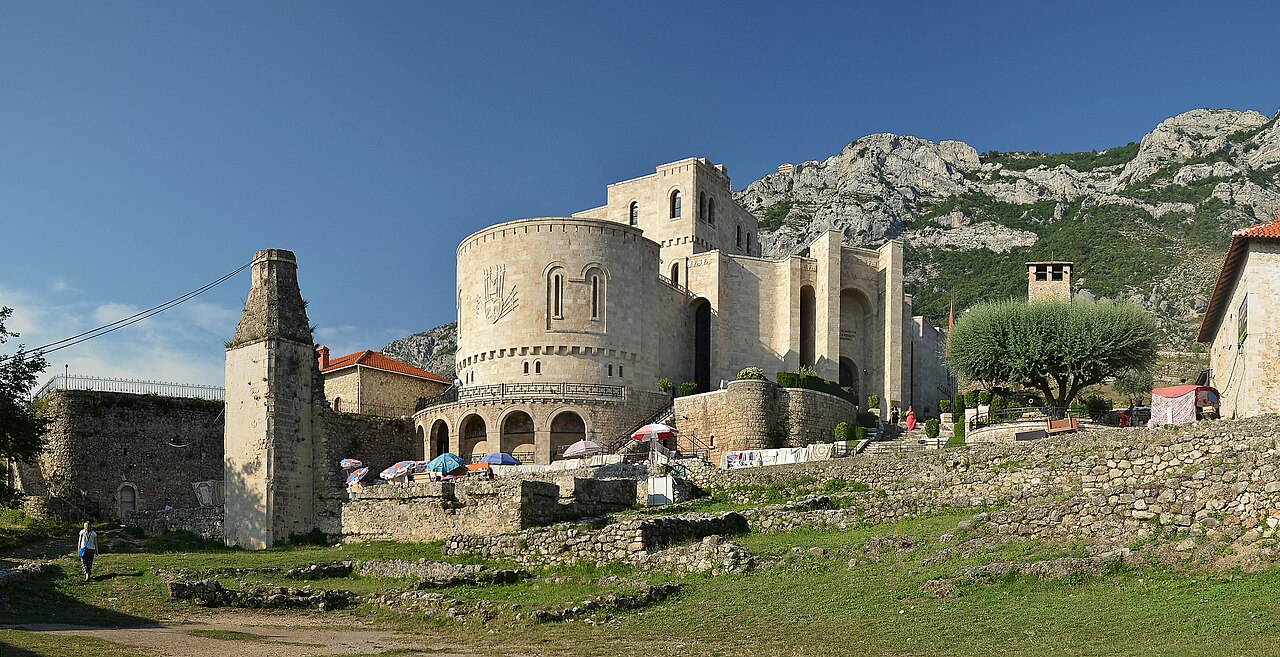
Hilltop castle of Skanderbeg, just north of Tirana.

Best time
Mar – Jun, Sep – Nov
Stay
Day trip
From Tirana
45 min by car
Per day
€25 – €70
About KRUJË

Where the national story gathers.

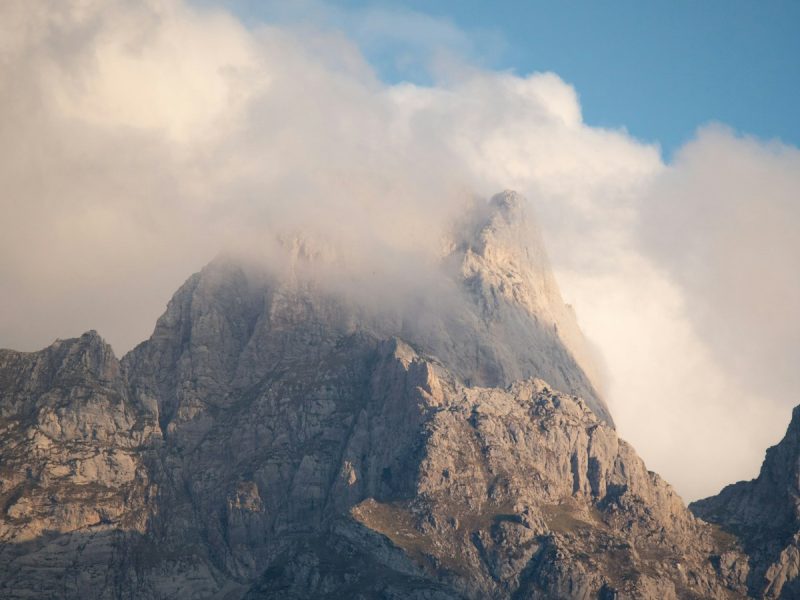
Krujë sits high above the plain north of Tirana, with the castle walls pressed against the mountain and the old bazaar running below them.

The Skanderbeg Museum anchors the visit, but Krujë is not only a museum stop. The bazaar still sells woven rugs, filigree, carved wood, copper coffee sets, and older objects that look pulled from family cupboards.

It works best as a half-day or full-day trip from Tirana. Come for the history, stay for lunch in the castle quarter, and leave time for the mountain road to Sari Salltik if the weather is clear.

Castle quarter context

Read the place before you move through it.

Kruje is often sold as a Skanderbeg day trip, but the castle quarter is the real lesson. The fortress, old bazaar, family workshops, and new albergo-diffuso style stays turn the site from a monument into a lived-in hill town above the Adriatic plain.

Related guides Culture hub
Inside the castle walls
  • Skanderbeg Museum for the national story.
  • Old Bazaar craft walk for textiles, copper, wood, and antiques.
  • Castle terraces at sunset with views toward the sea.
  • Aperitif or dinner in the castle quarter after day visitors leave.
Day trips
  • Tirana - capital context before or after Kruje.
  • Durres - Roman port and Adriatic seafood.
  • Sari Salltik - mountain shrine and viewpoint.
  • Shkoder - northern gateway if you are driving onward.
Local tips
  • Stay overnight if you want quiet castle lanes after tour buses leave.
  • Buy from bazaar makers instead of using the market only as a photo stop.
  • Pair Kruje with Durres only if you start early.
  • Use a local guide inside the museum if Albanian history is new to you.
History & culture

Where Albania learned to call itself a nation.

No other Albanian town has done so much heavy lifting for the national story. Krujë is the place a 15th-century lord turned a mountain fortress into the symbol of a country that did not yet exist — and four hundred years later, the place 19th-century nationalists pointed at when they argued that it should.

A short timeline
  • 1190 First recorded mention of the fortress under the medieval Principality of Arbanon.
  • 1443 Gjergj Kastrioti — Skanderbeg — seizes the citadel and raises the double-headed eagle.
  • 1450 The first Ottoman siege fails. Sultan Murad II withdraws after months on the slope below.
  • 1466 Sultan Mehmed II — the conqueror of Constantinople — fails to take the citadel in person.
  • 1478 Krujë falls, ten years after Skanderbeg's death. The defenders are massacred.
  • 1912 Albanian independence declared in Vlorë. Krujë is recast as the seedbed of the nation.
  • 1982 Skanderbeg Museum opens inside the castle, designed by Pranvera Hoxha and Pirro Vaso.

Origins on a mountain spur

Krujë sits at 600m on a limestone shelf above the Tirana plain — a defensive position before it was a town. The Illyrian Albani tribe gave the country its name from somewhere near here. By the late 12th century the place was already important enough to be the seat of the medieval Principality of Arbanon, the earliest political entity Albanian historians point to as a recognisable forerunner of the modern state.

The Skanderbeg years (1443–1468)

Gjergj Kastrioti was raised at the Ottoman court as a janissary and rose to be a regional governor. In November 1443 he defected during a battle in Niš, rode back to Krujë with a few hundred men, talked his way past the Ottoman garrison, and raised what would become the flag of Albania — black double-headed eagle on red — over the citadel. He spent the next 25 years holding the Ottoman empire to a draw on this single piece of mountain. He died of malaria in Lezhë in 1468; Krujë held out another decade without him.

The three great sieges

Three sultans tried Krujë and three sultans failed. Murad II in 1450 with 100,000 men; Mehmed II — by then the conqueror of Constantinople — in person in 1466 and again in 1467. The defenders combined long-range archery from the walls, night raids on the besieging camps, and a refusal to surrender that became legendary in 15th-century Europe. The Vatican paid Skanderbeg's army; Naples sent grain; an entire intellectual cottage industry of Latin-language biographies grew up around the resistance, including Marin Barleti's 1508 Historia, the closest thing the period has to a bestseller.

After the fall

Skanderbeg's death in 1468 was the beginning of the end. Krujë fell in 1478, by treaty and then by massacre when the terms were broken. The Ottomans renamed it Akçahisar and held it for the next 434 years. The bazaar that runs below the castle today was built during that period; so was the Bektashi shrine of Sari Salltik on the mountain above. Albanian-ness as a self-conscious idea went underground — but it kept the Skanderbeg story as its central text.

The Rilindja and the museum

When the 19th-century Albanian nationalist movement (the Rilindja Kombëtare) needed a hero, it had one ready-made. Naim Frashëri wrote epic poetry about Skanderbeg; the 1912 independence declaration leaned heavily on the symbolism. Under communism, Enver Hoxha's regime — paranoid about almost everything else — embraced Skanderbeg unreservedly as the founding father of an unbroken Albanian resistance. The current Skanderbeg Museum was designed in 1982 by Hoxha's own daughter Pranvera. The exhibition is hagiographic and the building is brutalist, but the story it tells is mostly true, and the view from the terrace is the one the besieging armies looked up at.

Why it matters today

Krujë is small and easy to underrate. It is also the place where, more than any other, Albanian visitors come to understand what their country thinks of itself. The bazaar is for tourists, the museum is a school trip for every Albanian schoolchild, and the castle walls are the backdrop of a thousand wedding photos. Come in the morning before the buses; stay for lunch above the plain; let the mountain explain what flat coastal cities cannot.

If you read one thing in Albania, read about Skanderbeg. If you visit one place to understand the reading, this is it.

Where to stay in Krujë

Where to stay near Krujë

Hand-picked stays land here as we visit them.

Coastal road
Rent a car · KRUJë

You'll want a car.

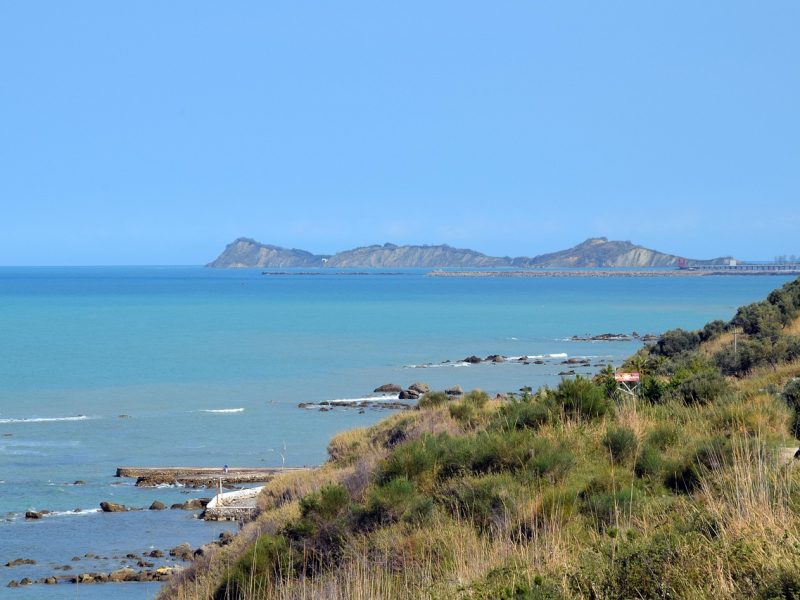
Krujë opens up when you can drive — to the coves, the villages, the mountain restaurant that doesn't take bookings. Pick up at the airport, drop off in another city.

See cars & prices →
Where to eat

Where to eat

Restaurant recommendations land here once we have eaten there.

Things to do

Four stops inside the story.

Day-trip ideas coming soon.

Tours & activities

Bookable routes from Krujë.

All tours
Getting to Krujë

How to get there.

On the map

Everything, pinned.

Nearby destinations

If Krujë is your base.

Frequently asked

The questions travellers actually ask.

Is Krujë worth a day trip?
Yes. It is one of the easiest ways to understand Skanderbeg, the national symbol, without committing to a long journey.
Do you need a guide?
Not essential, but helpful inside the museum and castle. If you are short on time, hire a local guide for one hour and explore the bazaar yourself afterwards.
Can you stay overnight?
You can, but most travellers do not need to. Overnight only makes sense if you want sunset and sunrise views from the castle quarter.
Stay connected in Krujë
Order an Albanian e-SIM before you arrive. Activate on landing — no shop visit required.
Get e-SIM